

“Tenemos que amputar su pierna.” Si usted a escuchado estas palabras de su médico, probablemente tiene un remolino de emociones y preguntas a través de su mente.
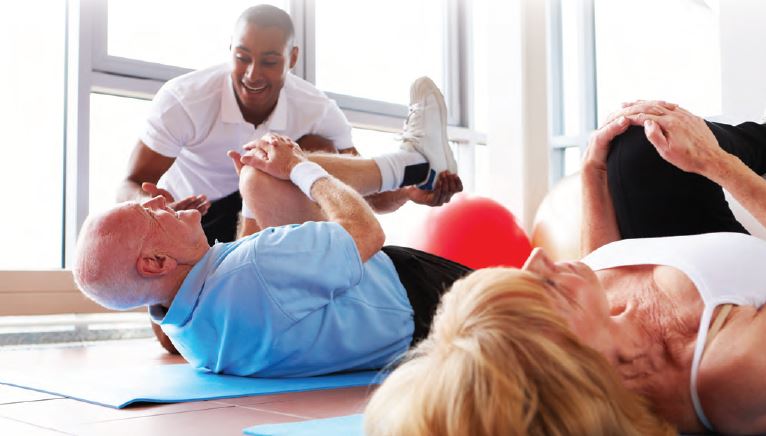
Preventing Contractures
Volume 21, Issue 3 May/June 2011 –
by Nicholas LaRaia, PT, DPT, NCS –
The most important point in any discussion of contractures is that prevention works best. However, if a contracture does develop, there are many approaches to treatment. The best results are usually obtained through a combination of approaches, but one of the most important elements is an active exercise program.
Lo que puede esperar durante los primeros 12 meses posteriores a la amputación de una extremidad inferior
Como una persona que acaba de atravesar una amputación, no está solo si siente que no tiene idea de lo que le espera durante su primer año como amputado.
La importancia del entrenamiento del modo de andar
Volver a caminar con “normalidad” es el objetivo de casi todas las personas a las que se les ha amputado una extremidad inferior.
Los primeros 12 meses posteriores a la amputación de una extremidad superior
Su vida ha cambiado: ha perdido un brazo. ¿Y ahora qué? ¿Qué podrá hacer?
Identificación y control de problemas cutáneos con el uso de prótesis en extremidades inferiores
La fijación de una prótesis es complicada debido a que se utilizan partes del cuerpo humano para tareas diferentes de sus funciones originales.
Bilateral Upper-Limb-Loss Rehabilitation
Volume 21, Issue 1 January/February 2011 –
by Shawn Swanson Johnson, OTR/L –
Upper-limb loss is a rare occurrence. Consider this fact: for every incident of upper-limb amputation, there are 30 incidents of lower-limb amputation. Bilateral upper-limb loss is even rarer, and is extremely challenging, as there is not a remaining arm to perform daily self-care tasks.

The First 12 Months After Upper-Limb Amputation
Volume 21, Issue 1 January/February 2011 –
by Dan Conyers, CPO, and Pat Prigge, CP –
Your life has changed – you’ve lost an arm. Now what? What will you be able to do? How will others see you? Will life ever be “normal” again? While it is over- whelming to face so many unknowns, be reassured that there are many people and organizations that can help guide you and your family along the path of recovery and rehabilitation. Over the next 12 months, your life is likely to include several recurring themes: medical care, emotional challenges, prosthetic care, and occupational and physical therapy.
Consejos para aumentar el éxito como usuario de una prótesis de extremidad inferior
Aun para los usuarios de prótesis de extremidad inferior más experimentados, usar una prótesis puede generar contratiempos en la vida cotidiana, o incluso problemas mayores.
Identifying and Managing Skin Issues With Lower-Limb Prosthetic Use
Volume 21, Issue 1 January/February 2011 –
by M. Jason Highsmith, DPT, CP, FAAOP, James T. Highsmith, MD, and Jason T. Kahle, CPO –
Fitting a prosthesis is complicated because parts of the human body are used for tasks for which they are not designed. The skin/prosthesis interface is at fault for many complications. Here, a synthetic material, such as silicone or plastic, is in constant contact with the skin. Skin is not well-suited for this type of material contact. Skin problems are one of the most common conditions affecting lower-limb prosthetic users today. Skin problems are experienced by approximately 75 percent of amputees using a lower-limb prosthesis. In fact, amputees experience nearly 65 percent more dermatological complaints than the general population.